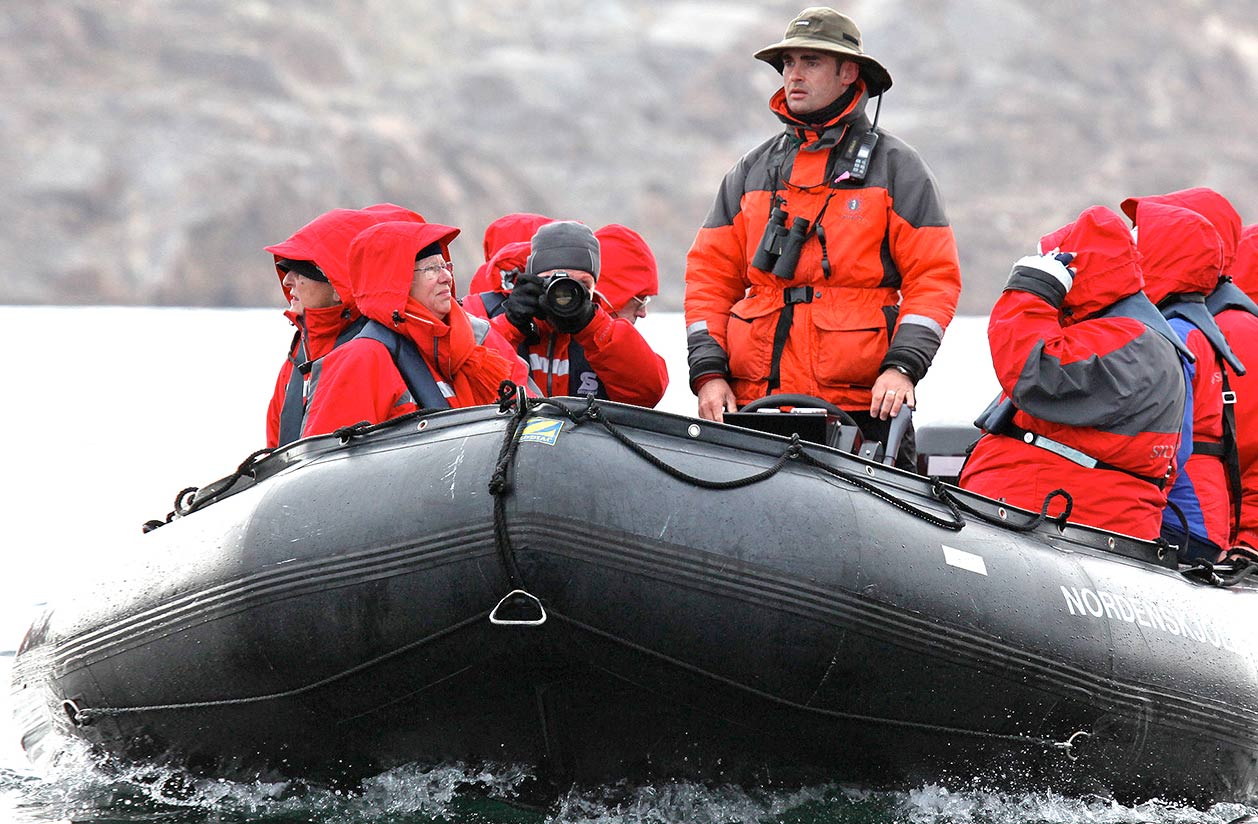
Unexpected bonus this January 2024, we went to visit the world’s biggest iceberg, an incredible 3,900 square kilometres of ice ploughing through the southern ocean at 30Nm per day. These are a force of nature, incomprehensible the human scale! I was working as a polar guide for EYOS expeditions guiding clients to remote spots, something I’ve done as a related work story to my professional photography and polar experience for a long time, that gave me the chance to see this behemoth up close.
Nice interview with Emile Donovan, Radio New Zealand, about recent projects, winning NZ photographer of the year, and a few other things we gassed on about. Audio link here:
Recently spent some time photographing our rare native Giant Kokopu fish, a secretive seldom seen species, and therefore, unknown to many. Here’s a video that Forest and Bird put together as part of a drive to increase awareness of the species, which shows some of the efforts to try and film them in their natural habitat. Grab a coffee and have a look at:
Have a look at more of our native fish here.
Many thanks to Forest and Bird for giving this species, and their plight, a big push.
Been a manic but terribly exciting week on the F800GSA around NZ shooting another feature for New Zealand Geographic Magazine on land use in NZ.
I’ve learned a heck of a lot more about our big picture agriculture, appropriate land use, precision farming and adding value to our exports to get out of our traditional ‘commodities from the colonies’ history. Stay tuned for the next issue coming very soon – in fact real soon – I had to ride like the wind from the Manawatu late tonight to make deadline for press!
Plenty of folks would get in line to shoot Gareth Morgan I’m sure, but it’s not that easy – I can attest.
Gareth Morgan is a man of many interests, passions and opinions, whose strong desire to get good things done can certainly polarise - take his cat control views (which have gone global) for instance.
So I was certainly keen when NZ Geographic Magazine commissioned me shoot Gareth for a portrait profile piece. Serendipity intervened again, as I discovered that we were to be on the same ship in Antarctica the following month.
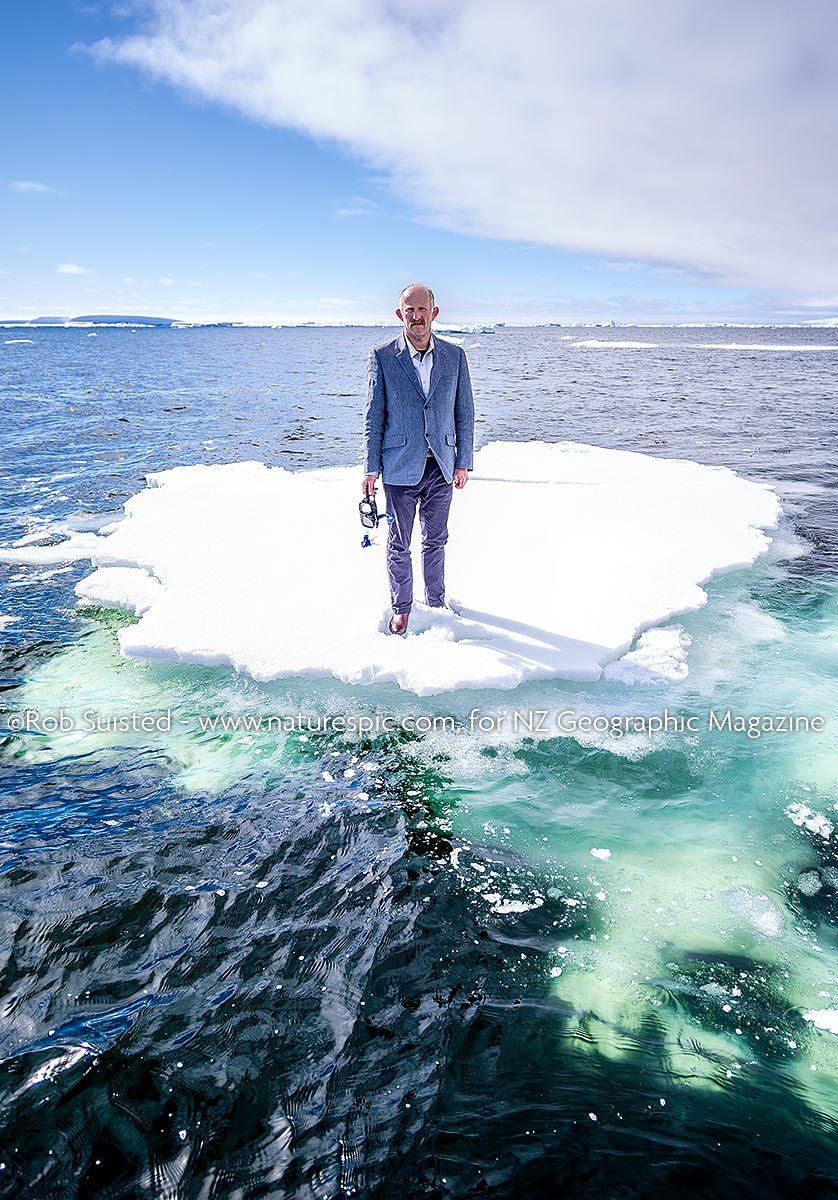
Gareth Morgan is a strong climate change campaigner and author of a book on the subject, so a bit of creative dreaming arrived at a strong metaphorical image to capture the man’s character and one of his important messages.
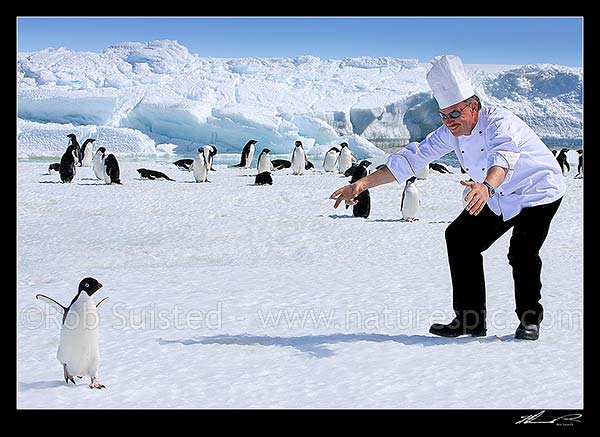
This was my 17th trip to Antarctica. I drive boats and lecture, as a break from professional photography. So, we took a boat on Xmas day, out into flat water behind Plenneau Island, borrowed a face mask and snorkel, and dropped Gareth off on the best piece of ice we could find to represent the melting ice of climate change. The casual holding of the face mask and snorkel in normal business attire was designed to represent the foolish notion that many people carry, vis, that we have a ‘plan B’ somewhere for climate change. Plan B isn’t an option – just as a facemask isn’t here.
I’m proud of the result – strong metaphorical frame that captures Gareth Morgan in a striking way – no trickery, no post production work – simple. BUT check out the pile of comments on Gareth Morgan’s facebook page. It’s galling when some people, from the comfort of their home, suggest a great photo must be ‘photo-shopped’. *Cough* – THAT photo is the combination of skills learnt over a long time as a professional photographer, planning, a good creative process, and qualifications and experience operating boats on over 20 polar expeditions! Everyone is a cynic, a critic, or blimin both…
Rob Suisted polar guiding and boat driving
Anyway, here’s the NZ Geographic Magazine article the image was used in: Out in the Cold. And Gareth was a bloody good sort, keenly signing up to the idea, and willingly being marooned on a small ice floe while we (I and his family) drifted off without him, in the frozen middle of nowhere. Shot with a Pentax 645Z and DFA25mm lens.
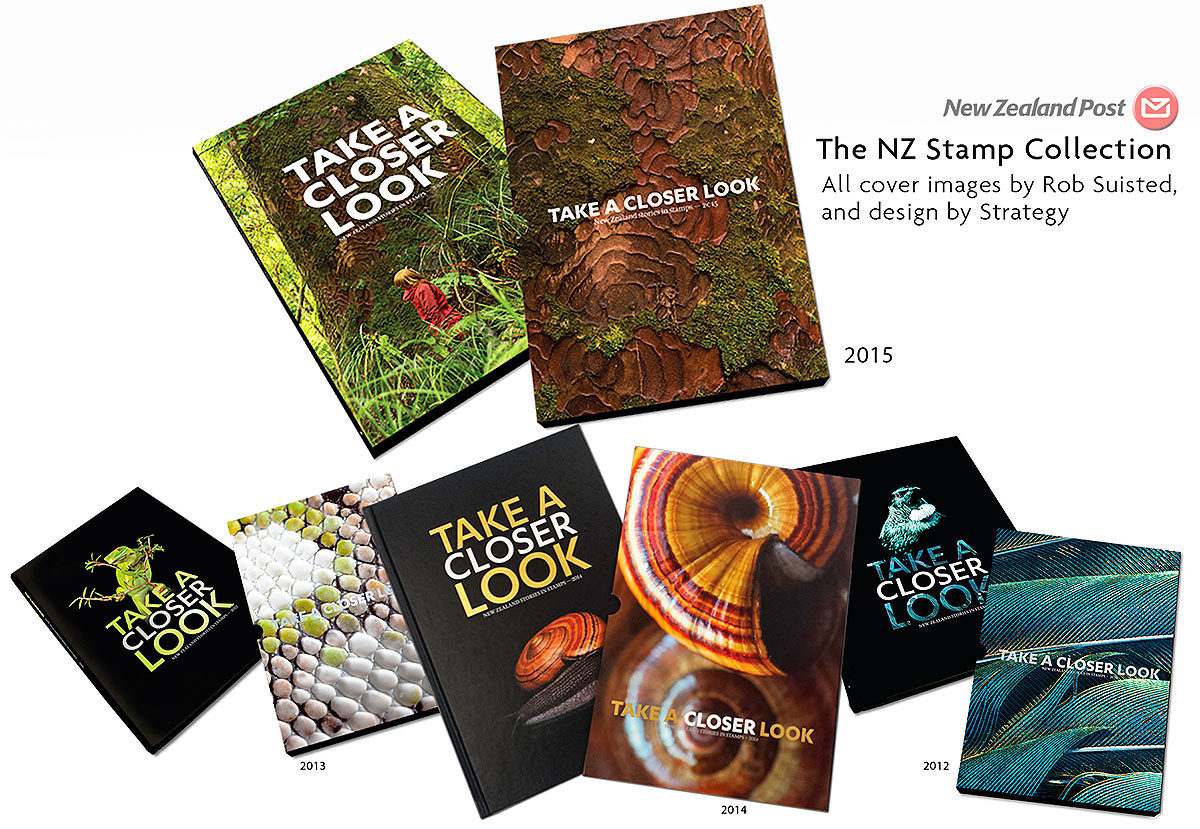
NZ Post commissioned me to shoot the covers of the NZ Stamp Collection (an annual book containing all the year’s new postage stamps) again this year. The theme is ‘Take a Closer Look’, and follows on from the previous 3 covers we’ve done together. This year Kauri Trees were our focus.
The most beautiful Kauri Tree (Agathis australis) in NZ
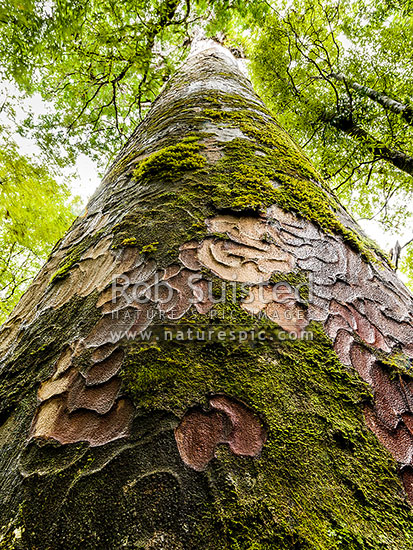
I was fortunate that last year I was taken to a very beautiful Kauri Tree, by a remarkable man called Kevin Prime. I was commissioned to shot his portrait for a book project, and wanted to photograph this humble man against the might of the majestic Kauri. Kevin knew just the tree and he introduced me to it. A minute after we arrived, in the peace of the calm forest, a quiet whirling sound started up, and got louder. What was it? Suddenly the tree’s seeds started landing on my head and shoulders. It’s had cast it’s seeds out onto us. The hair stood up on my arm as Kevin said how auspicious this was.
So when NZ Post wanted a kauri for their annual stamp collection book, I knew exactly which tree I wanted to showcase to the nation. Never before have I seen such a distinctive bark pattern on a Kauri Tree. The hammered texture of this one is very striking, and almost appears as an embossed surface on the book box set.
NZ Post's The NZ Collection, annual stamp book covers by Rob Suisted
If you’d like to see more of this beautful tree, or get a closer look at the distinctive bark patterning, have a look at our Kauri Tree photo collection.
I’ve twice been commissioned to shoot Dr Jan Wright’s portrait while she was the Parliamentary Commissioner for the Environment. I like making strong ‘story portraits’ – images that capture the essence, work, passion, or message of the subject. Dr Jan Wright was a perfect subject for this style.
Here’s the ‘official portrait of Dr Wright while in office. I wanted to put Dr Wright into nature, not just make it her back drop. The colours are very pleasing to my eye:
New Zealand Geographic commissioned me to record her portrait for the magazine. Here’s Dr Wright in her natural environment, with a carefully placed nod to the halls of government power, to signify the relationship and influence of her role. Here’s the link to the article.
I’ve been keeping a big secret for months – my photographs appear on all of them. I’m very proud about it, as you can imagine, to have you carrying my work in your wallets and purses. Click on the image for a closer look:
New Zealand bank notes redesigned from Rob Suisted photos
UPDATE: News article about the use of my images on the new currency bank notes, and NZ post stamp annual book cover.
My job was to communicate Bryce’s varied roles in one image. This was a formidable task as CEO of the NZ Fish and Game Council his is a complex and varied role. Primarily, Fish and Game is a statutory organisation concerned with the rights of anglers and hunters, and advocating for improving habitat.
The portrait needed to capture that variety. I wanted to focus on his advocacy for anglers and freshwater quality for all of us, but also how his day can stretch from political halls of the The Beehive, to the bank of a river. Here’s what I got:
The shot was fairly complex, it required a wide angle underwater photo to catch the habitat around Bryce and called for a balanced mix of underwater strobe, above water flash and ambient natural light. I used a slave trigger that fired the topside flash whenever the underwater camera strobe fired – one underwater strobe lighting Bryce’s legs, one flash pointing upward towards the softbox flash, and natural light toned down to give a sombre background to delineate Bryce’s from.
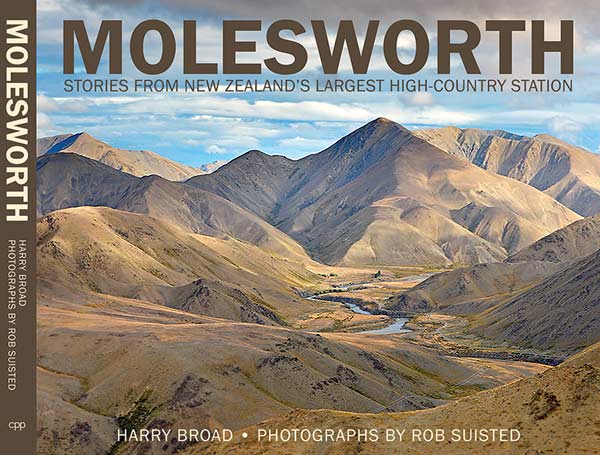
After a 3 year gestation, our Molesworth Station Book is done – one of the most satisfying book projects so far.
Harry Broad is the author, and I’ve produced the photos. It’s been an incredible adventure.
Here’s an interesting behind the scenes video I shot while filming the unique Robinson Saddle muster (caution; it contains hardwork, a greenhorn learning to ride, some skinny dipping, some adventure, and a few laughs. But, mostly it contains spectacular scenery and a rare glimpse into a unique high-country lifestyle and job):
Special thanks to Landcorp Farming Ltd, Department of Conservation, the managers of Molesworth (Jim and Tracey Ward), Craig Potton Publishing, everyone who has featured in the book, and especially the many people who worked hard for us to make the project successful. Thank you.
Just had an enjoyable Radio New Zealand interview with Harry Broad and Kathryn Ryan. You can listen here to Harry share some wonderful stories he’s uncovered through his research (I never get sick Harry’s colourful telling), and I attempt using words to explain my visual portrayal of the Station and experiences.
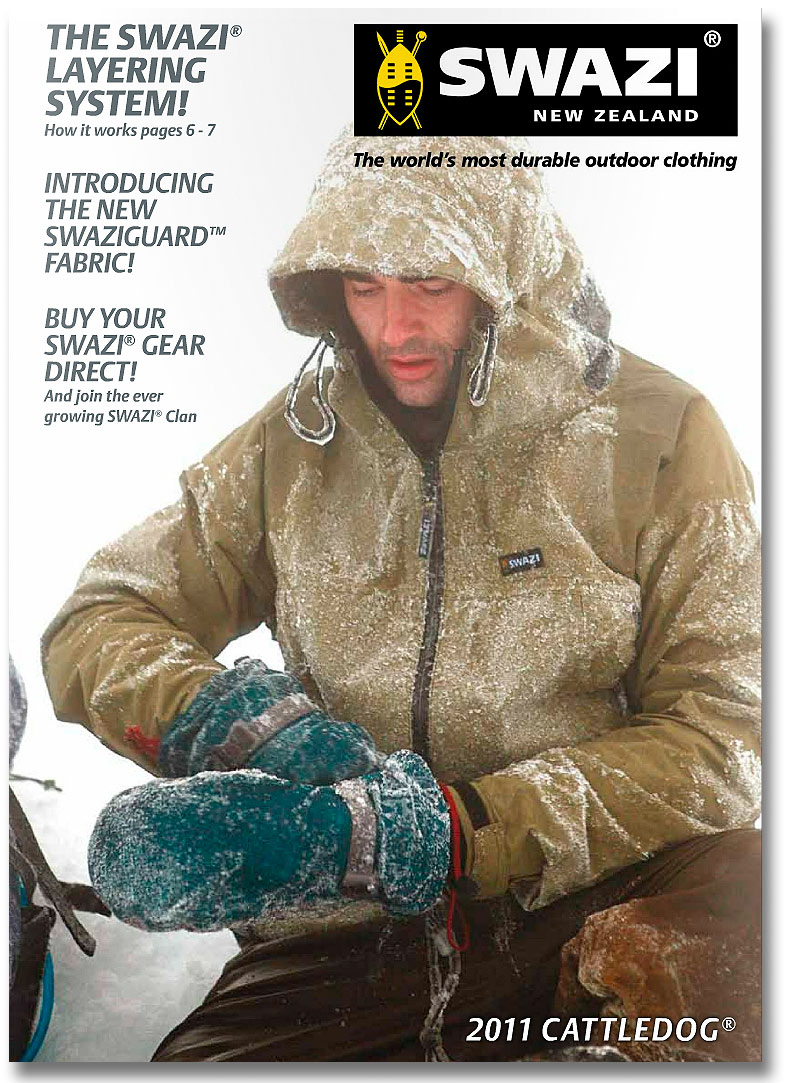
So the buggers put me on the cover, freezing my bits off. I can’t be too upset, testing a new outer shell garment for Swazi Apparel can lead to trouble when you push the limits, but you’re going to get an experience out of it too. Here’s the shot, a quick story behind a beaut experience.
Freezing my proverbials off, Mt Taranaki winter
I set off with Bia Boucinhas (a Brasilian friend training as a mountain/Antarctic guide in NZ) to climb Mount Taranaki and get some winter photos. Davey Hughes of Swazi had stuffed a newly designed goretex lightweight ‘Narwhal’ anorak into my hand and told me to test it the day before. Of course I’d said. Little did I know what a testing it, and we, were going to get. The day had been fine as we set off to climb to Syme Hut on Fanthams Peak for the night, before climbing Mt Taranaki the following day. As is often the case here, the weather changes very fast despite the best weather forecasting, and sure enough we were pushing through cloud and wind by the half way mark.
Approaching the summit of Fatham’s Peak we were hit by hurricane strength winds and a freezing southerly which made it very hard to stand up. Visibility dropped to 3 metres making it very hard to find the white ice covered hut in a total white out where visibility was 2-3 metres. Things were getting serious at this point as our core body temperatures were plummeting fast in the… > > > Continue reading : full post + comments > > >
I’ve been photographing a book about Molesworth Station; New Zealand’s largest station at 200,000 hectares (500,000 acres!).
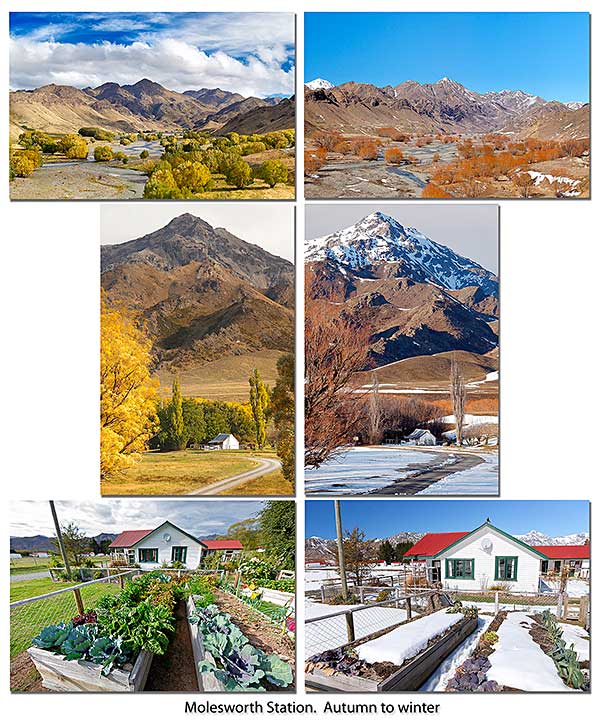
The dramatic changes in landscapes, colours and seasons are imperceptible to our human time scale. I’ve just compared 3 photos taken 5 months apart and watched the richness of colour fade out to a stark reality of a barren winter landscape. Beautiful.
Molesworth Station seasonal contrast. Click to enlarge
Yesterday Garry Glynn contacted me to photograph a family heirloom piece. Other photographers he’d contacted weren’t interested; I assume it being a small paying private job. I had a hunch that there was something more interesting about it, took it on, and luckily I was proved right.
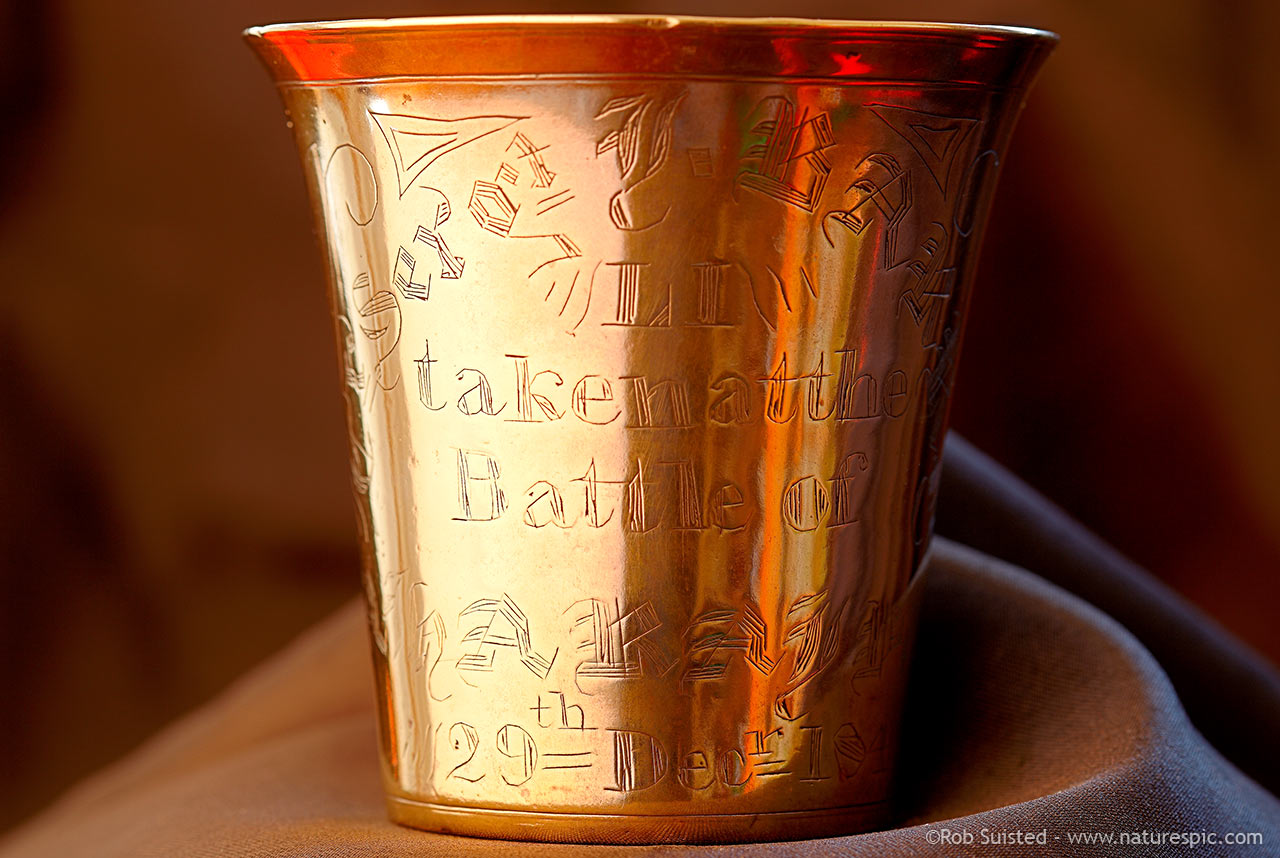
89 year old Garry arrived and delivered to my hand a small simple heavy brass drinking cup similar to many I’d used in India. Nothing special except it had engraving around the outside. It carried a story that I’m still thinking about today; a story of history and horrific human bloodshed.
From the Battle of Mahajapore. Scroll down for result
Turns out Garry’s relative (Col Sgt J. Barry, 39th Dorestshire Regiment) was present at the Battle of Maharajpore, India, on the 29th December 1843. He was lucky to make it. 5000 people did not make it that day! In a nutshell, Central and Northern India had fallen to British forces in 1818, but Marathas in Gwalior saw the failed British campaign in Afghanistan as opportunity to regain independence. The battle ensued. It’s believed that nearly 800 Bristish soldiers and 3-4000 Marathans were killed; an unbelievable slaughter of human beings in one day. The significance of this event for the British is remembered with the Gwalior Star campaign medal.
Garry is passing this family ‘war trophy’ or heirloom down to the next generation and wanted a photo showing all the cup’s text to give to his relatives. My job was to attempt that. Given the circular object with concave face, and the highly reflective nature of the surface, the job wasn’t straightforward. But I love a challenge, and I reckon it could be done.
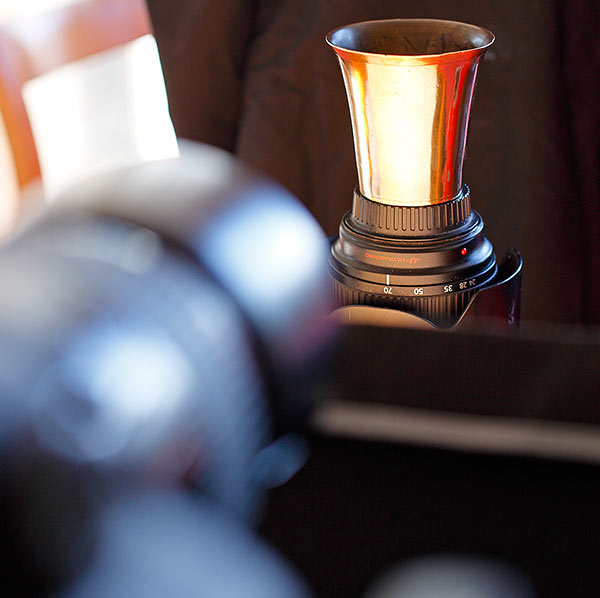
First up was to prepare the vessel. A good polish brought out a good shine, and a closely held candle flame sooted the surface up nicely, and another shine left a little soot in the engraving. Next was figuring out how to light the face of the vessel with even light. No problems there, get an Elinchrom studio light out and pop on a softbox, but trouble is that you can’t get a camera in there without interrupting the clean lighting. I tried a couple of tilt shift lenses attempting to shoot off the central axis, but this just distorted too much. Then I figured the concave front face would let me lower the softbox and shoot over the top without breaking the clean reflection – great.
Camera shooting over studio flash and softbox
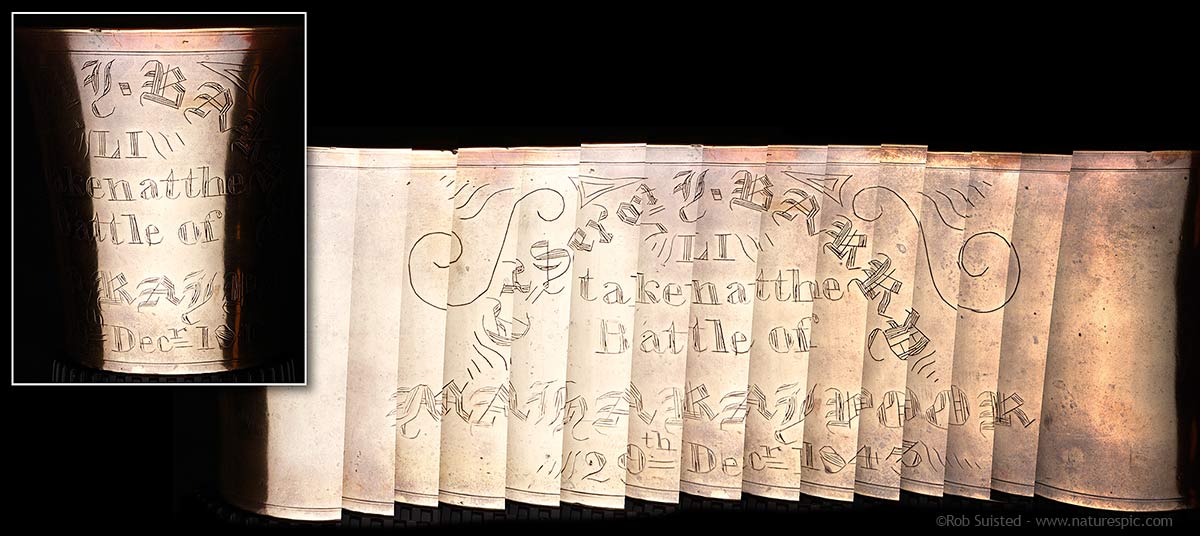
Once a nice even light was sorted, next was to carefully rotate the vessel and photograph ovelapping images. Another lens base proved to be the perfect stage.
Photo slices ready to be worked up
I ran this through a panorama stitching programme and gave it a clean up. Garry just called around today and seems very happy with the result:
The final result
But I’ve been thinking about the cup since: what horrors and good times it has witnessed, and what route it has taken to arrive in my hands? Garry tells me that a number of ‘retired’ seasoned British soldiers were offered land in New Zealand in exchange for being willing to fight in the NZ land wars if necessary. They become known as ‘The Fencibles’, and this is the route in which the cup arrived in NZ.
I also found this gritty, stiff upper lip, description of the battle by Henry Man. It’s a short honest read that gives you an appreciation of how gnastly that day must have been. Please take a moment to read it if you can.
So, all in all, a photo job that paid for itself in not only in dollar terms, but that was also rich in knowledge, experience, and technical challenge.
Bianca Edwards doesn’t do things by halves. But her back was broken in halves. Her story is as remarkable as her attitude. Several weeks ago I shot the New Zealand Geographic Magazine article on ‘Happiness’. Bianca was part of this story. I enjoyed meeting her, and thoroughly enjoyed working together on an image that captured her remarkable spirit. On the drive back to the office, my assistant Aliscia Young spoke about the inspiration we’d both experienced. Let me tell you about it.
Bianca was a top athlete, competing in multi-sport events, and while training, was hit from behind by a van at 100km/h. Her back was shattered and she was lucky to survive. What followed is a remarkable recovery led by determination, optimism and, I think above all, the unwillingness to be a victim to her situation. The article by Dave Hansford focuses on how Bianca was able to readjust her expectations; from expecting to win events, to making simple steps, like wiggling a toe. A trait that some research suggests is key to being happy.
So, knowing this, how do you approach a photo shoot that gives dignity to the subject, captures their spirit, and avoids creating another cliched photo of a disabled person toiling against obstacles?
Discussing angles on the phone with Bianca was a joy – full of ideas and keen to give it her best, we threw around ideas about the things that were important to her – fitness, swimming, study, Ducatis… Motorcycle riding was key, especially with her friends and fellow Ducati owners Carla and Fiona (friends like this that Bianca rates in her recovery) . Hang on….from not being able to walk, to riding big motorcycles?! The angle fast became clear. But, how to shoot a portrait that captured this story?
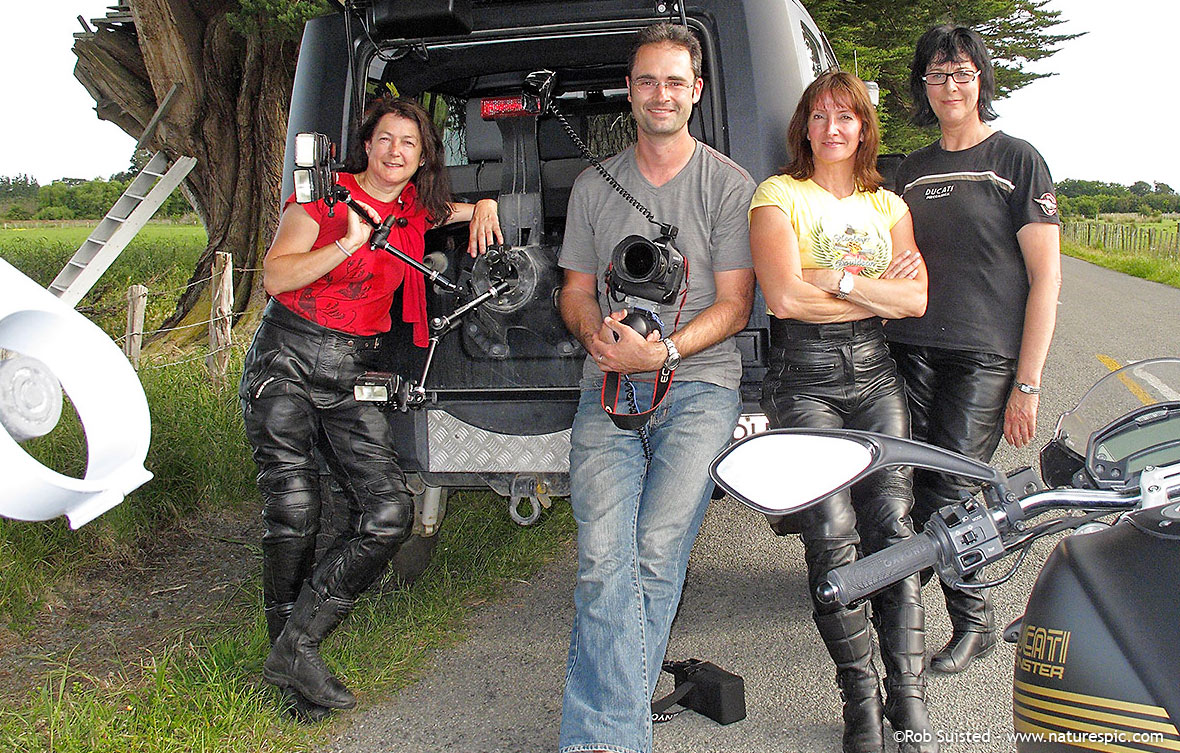
After the shoot. Carla, Rob, Bianca & Fiona. The Ducati women of the Wairarapa.
Bianca’s story in the happiness article for me is one of ‘freedom’ – freedom of movement, but also freedom of mind. So, it was important that we had a very dynamic image to portray freedom. We tried to accomplish this with an open face helmet, but the freedom died. With considerable care we took this without the helmet. I think we caught Bianca’s spirit in the image below. What do you think?
Bianca Edwards and her Ducati, with Fiona and Carla
TECHNICAL SPECS: We pottered very slowing along with a 1/8th sec shutter with ND filter, while using my aerial photography gyro stabiliser to maintain sharpness but achieve a blurred movement. I super-clamped and magic armed 3 strobes to the back of the vehicle, and shot from the rear hatch. Canon 1dsMk3, 16-35mm, ND filter, 3 canon flashes, Kenro gyro.
A bit outside my normal beat, but despite initial trials and tribulations, it became a most satisfying and challenging week. Meeting, filming and spending time with such a varied group of people interested in happiness, really made me happy. Not surprising really – from a buddhist monk to a philosopher, brain researcher and even an athlete who has learnt to walk again and now shes rides ducatis for fun, it was very inspiring. I hope my images do them all justice. Here’s a hint of what’s coming. And here’s another teaser from NZ Geographic http://twitpic.com/3bf5ed. Have a look out when the next issue arrives, and let me know what you think. I’ll be writing more on this subject. All the best, Rob
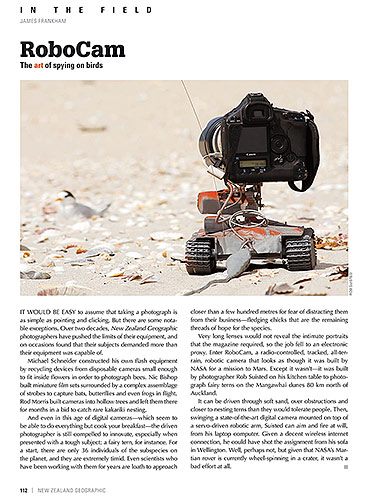
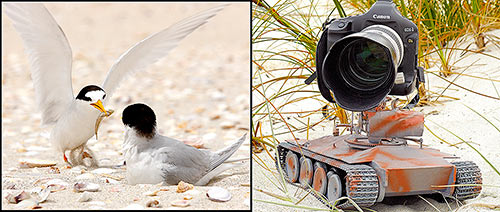
New Zealand Geographic featured a nice article about Rob’s TankCam, otherwise known as RoboCam (nice touch guys!). If you’re interested in a behind-the-scenes look of the Fairy terns shoot please check out the article here and Rob’s video here.
Let us know what you think, it’s always great to hear your feedback!
I’m doing a lot of commercial helicopter photo work at the moment, mainly for Tourism New Zealand. I want to take you along behind the scenes in Fiordland New Zealand, on a job I just got home from. Spectacular! Things don’t go as forecast so it’s an interesting day with some interesting sights and some interesting blokes. You have to watch this:
The day started in a run of perfect weather, but mysteriously a thick layer of fog/cloud filled Fiordland making filming tough for myself (stills photog) and the HD Cineflex video helicopter team to operate. What happens next?
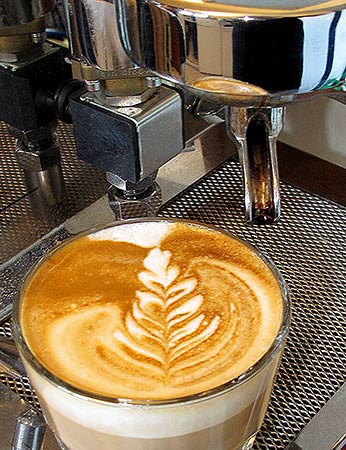
I had an ephinany this morning. I poured my first decent bit of Latte Art. After months of learning and trying hard, this one just popped out without fanfare or conscious effort. I’m proud as, and its got me thinking…
Rob's first latte art fern
Several things have been drawing coffee and photography together for me over the last few days so I’m going to make a caffeine fueled comparison.
It would be fair to say that coffee has become quite important at Nature’s Pic Images. Over the last year a brand new Vibiemme Super E-61 group head espresso machine has become a shrine to which morning work schedules often bend around. Before actually owning a coffee machine of any quality, I enjoyed a good coffee at a fav local cafe (Cafe duParc), but I had no idea of the skill employed by Georga, Terry, and the team when making a consistently good brew. There is a lot to know and a lot of variables to deal with. I now tip my hat to a good barista.
So, why the hedonistic comparision between coffee and photography?
Both are, at the same time, technically intensive, and creatively infused. It’s an interesting blend and one that I love. To make the perfect photograph is impossible; to make the perfect brew is impossible. What do you think?
I was reading an article (for the life of me I can’t find it now) by a life long barista where he claimed to have only poured about 30 ‘God Shots’ in his career. God shots would be an espresso pour to die for I guess? There was no definition….. > > > Continue reading : full post + comments > > >
TANKCAM (‘Rob-o-cam’). Tough assignment to film NZ’s rarest bird – the Fairy Tern for NZ Geographic Magazine. Less than 40 birds known, they nest in the open and human disturbance may stop breeding.
Solution was to build a remote control vehicle that I could very slowly inch towards the nest over an hour while we monitored the birds’ reaction and leave it set up to capture intimate scenes (very, as you’ll see below!). So that’s why I built TankCam. We’ve kept the highly successful assignment under wraps until now. This video tells the story and gives you an idea of three days worth of filming, behind the scenes. Please view and post your comments – it’s great to get your feedback:
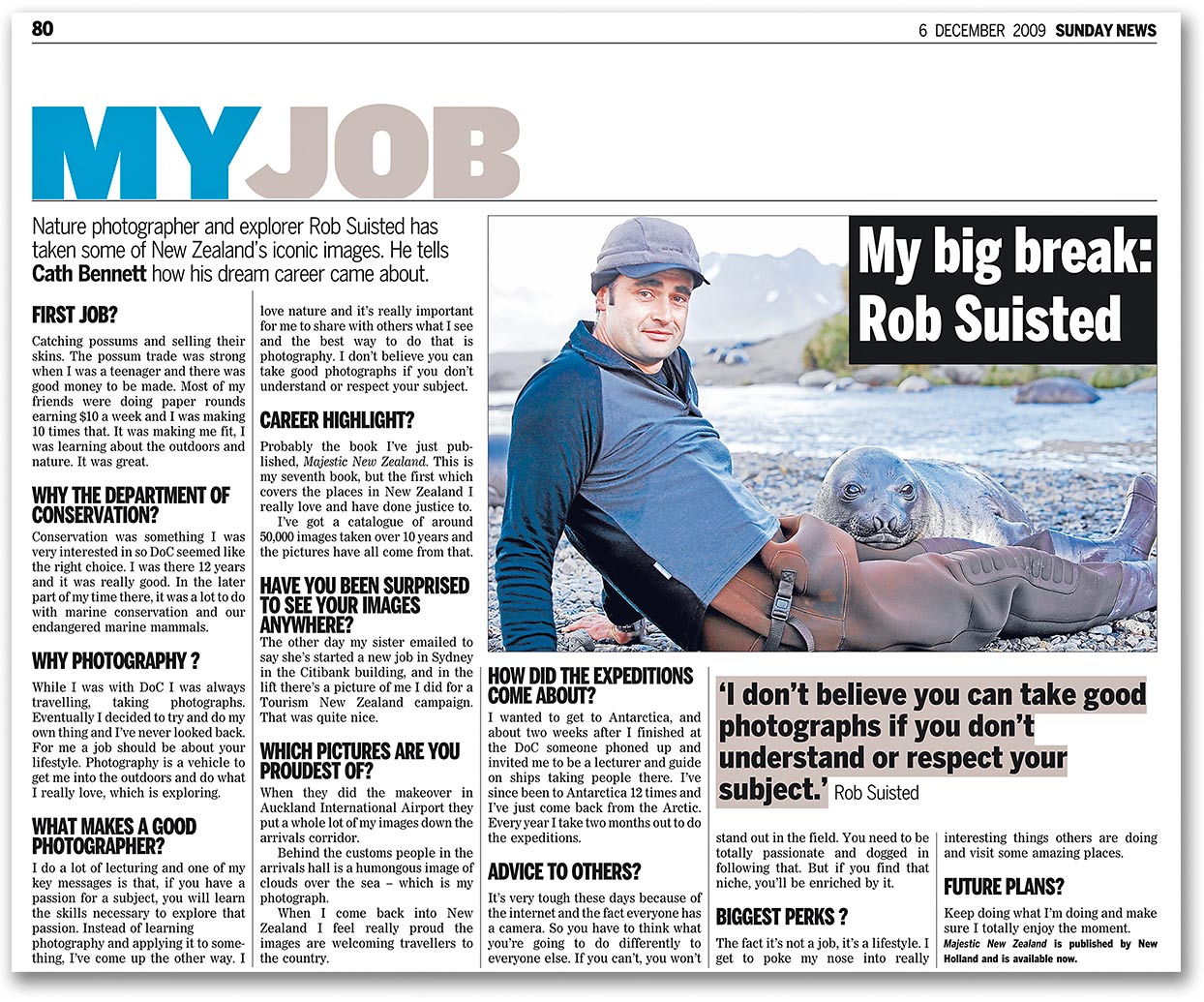
This just out in the Sunday News newspaper. Cath Bennett was interested in what motivates me to craft the lifestyle I have. It’s makes it all sound pretty glam, but of course there’s a load (a truck load actually) of hardwork invovled, but that’s part of anything we love.
I’m really into motivating people to craft lifestyles that they love, so hopefully this article shows it’s possible, regardless of the path you choose. What do you think? Is it possible for most people? Cheers Rob
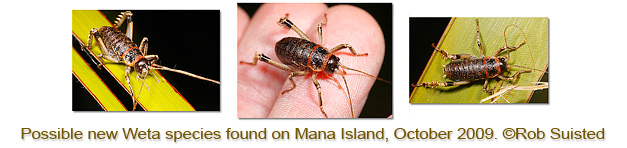
Two weeks ago I was on Mana Island (a special Island sanctuary for rare NZ creatures) on a wildlife photo shoot for New Zealand Geographic Magazine (here’s a small sneak preview) for their 100th issue (congratulations to James and the team!) and while out filming past midnight I spotted a very unusual weta species.
I got some good photos, realised it was different and contacted the weta experts. No one has seen anything like this. There’s a chance it’s a juvenile Cook Strait Giant Weta with odd markings, but then there’s also a chance it’s a whole new species. Very exciting…colouration and some body features are very different.
So today I’m heading back to Mana Island for the night with 4 weta experts. We want to see if we can catch the insect again so they can determine how significant the find is! Back Monday evening.
Update 26 Oct 2009: Well, we found the spot I originally spotted the unknown weta (shown above), but strong winds conspired to make the search tough. We’ve marked and will be monitoring it for future developments.
We did have a top night though, finding a couple of Gold-striped Geckos (Hoplodactylus chrysosireticus) and a beautiful pair of Cook Strait Giant Weta (Deinacrida rugosa), some of the heaviest insects in the world – real whoppers! I’ll post a few photos of these shortly. Also, we saw the first nests of the very endangered New Zealand Shore Plover (Thinornis novaeseelandiae) on the beach. In fact, this morning I was enjoying a cup of tea sitting in the sunshine on the beach and a pair of rare plover came over and bedded down not far from my feet – how lucky is that! So, not successful this trip in finding the unknown weta, but great to see all these rare creatures.
Update 29 Oct 2009: I’ve just added a video of the Giant Cook Strait Wetas as they make great video actors! Check this out:



















![{Post this BLOG to Twitter]](http://blog.naturespic.com/wp-content/plugins/tweet-this/icons/tt-twitter-micro3.png)